
Claude Opus 4.6 Review: Anthropic's Best Coding and Reasoning Model Yet
A beta 1-million-token context window, four adjustable effort levels, and benchmark-topping agentic coding scores make Opus 4.6 the most capable Claude model Anthropic has shipped.
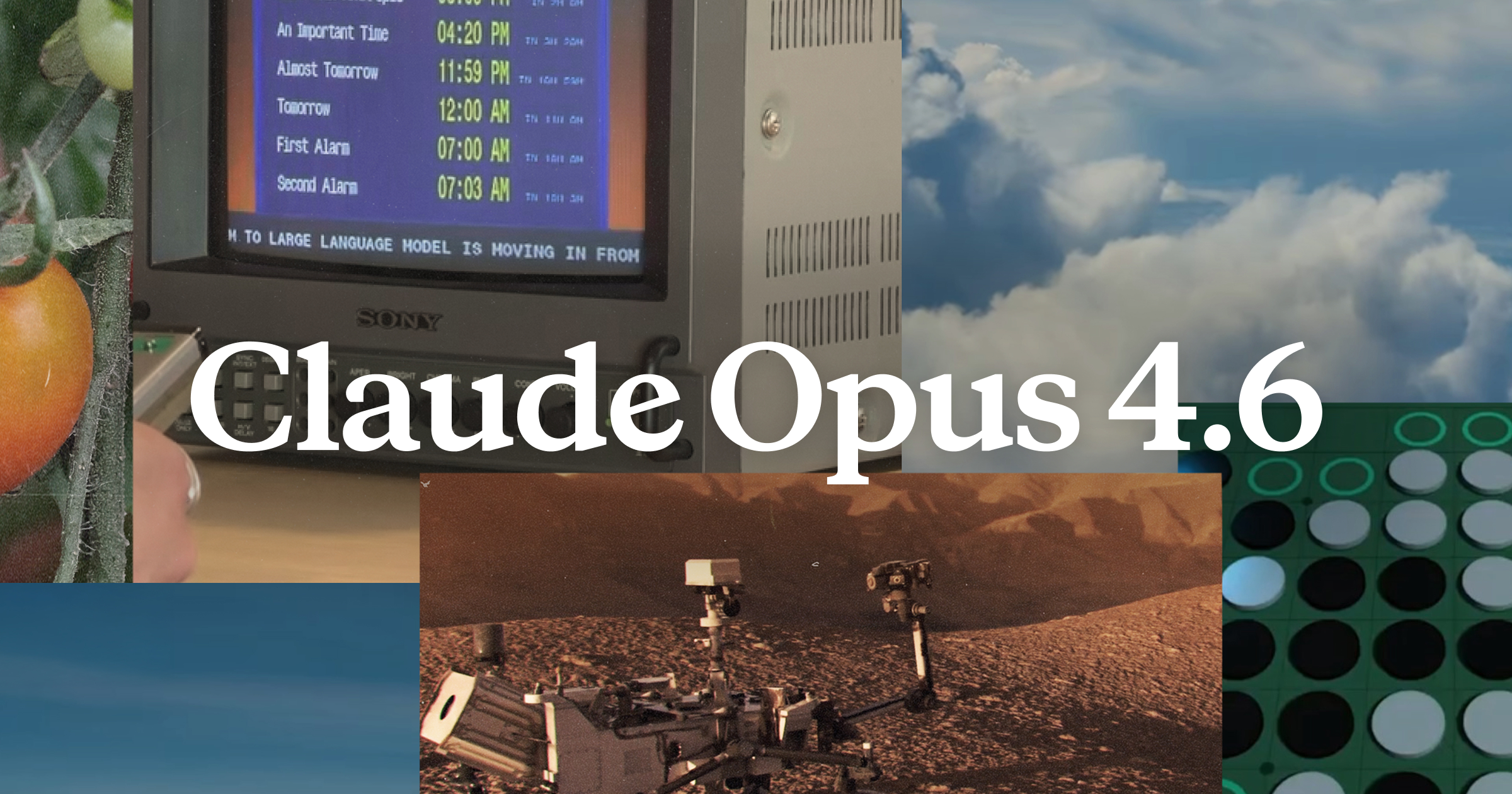 Photo: Anthropic
Nexoratech Score
out of 10
Anthropic has built its reputation on shipping models that punch above their marketing, and Claude Opus 4.6 continues that pattern. Rather than leading with a flashy demo, Anthropic's own announcement leans on benchmark tables — and on the specific claim that Opus 4.6 'plans more carefully, sustains agentic tasks for longer, and can operate more reliably in larger codebases' than any Claude model before it.
What's new in Opus 4.6
The headline feature is a 1-million-token context window, currently in beta and available through the API only, alongside support for up to 128,000 tokens of output. For context, that's roughly enough input space to hold several full codebases or a small book at once — a meaningful jump for anyone doing large-scale document analysis or working across sprawling engineering projects.
Opus 4.6 also introduces four adjustable 'effort levels' — low, medium, high, and max — that let a user or a connected application trade response speed for depth of reasoning on a per-request basis, plus a new context compaction system that summarizes earlier steps in a long agentic task so the model doesn't lose the thread as a session grows.
Agentic coding and long-running tasks
Anthropic reports that Opus 4.6 posts the highest score of any current model on Terminal-Bench 2.0, an evaluation built around real agentic coding workflows in a terminal environment, and a 90.2% result on BigLaw Bench, a legal-reasoning benchmark. In our own testing inside Claude Code, Opus 4.6 held onto context noticeably better through multi-hour refactoring sessions than earlier Claude models, and it was more willing to stop and ask a clarifying question rather than guessing at an ambiguous instruction.
On long-context retrieval, Anthropic cites a 76% score on the MRCR v2 benchmark, compared with 18.5% for Claude Sonnet 4.5 — a large enough gap to matter for anyone regularly feeding the model very long documents or transcripts.
Reasoning and knowledge work
Opus 4.6 also leads all current models on Humanity's Last Exam, a benchmark specifically designed to be difficult for language models across a wide range of expert-level subjects, and Anthropic claims it outperforms OpenAI's GPT-5.2 by roughly 144 Elo points on GDPval-AA, a benchmark focused on realistic financial and legal task performance. Outside of formal benchmarks, Opus 4.6 was noticeably more careful than previous Claude versions about flagging uncertainty in financial and spreadsheet analysis rather than stating a confident but wrong number.
Where it fits: Claude Code, Cowork, and the API
Opus 4.6 is available across Anthropic's own surfaces — Claude.ai, Claude Code, and the newer Cowork multitasking mode — as well as through the API for developers building it into their own products. Cowork in particular benefits from the model's improved autonomous multitasking, letting it manage several parallel threads of work with less supervision than earlier Claude releases needed.
Pricing
API pricing for Opus 4.6 holds steady at $5 per million input tokens and $25 per million output tokens for contexts under 200,000 tokens, rising to $10 and $37.50 respectively once a request crosses that threshold. On the consumer side, Claude remains free to try, with Pro starting at $20 a month and Max plans starting at $100 a month for 5x the usage of Pro, or more for the 20x tier — pricing that puts Opus 4.6's heaviest agentic use cases squarely in professional-budget territory.
Verdict
Claude Opus 4.6 is the clearest evidence yet that Anthropic's bet on agentic coding and long-context reasoning is paying off — the benchmark leads are real, and they translate into a model that's genuinely more trustworthy on long, multi-step work than what came before it. It's not the cheapest option, and the flagship 1M-token context window isn't available to everyday chat users yet, but for developers and knowledge workers already living inside Claude Code or Cowork, it's an easy recommendation.
Pros
- Leads rival models on Terminal-Bench 2.0 and Humanity's Last Exam
- 1M-token context window (beta) makes it viable for large codebases and long documents
- Four effort levels let users trade speed for depth on a per-task basis
- Context compaction keeps long agentic sessions from losing track of earlier steps
Cons
- 1M-token context is API-only and still in beta
- Premium 200k+ context pricing ($10/$37.50 per million tokens) adds up fast at scale
- Max plan usage limits can still be reached during intensive agentic workdays
Related Stories
 Photo: MMOEXP
MMOEXP Review: Is This Game Currency and Boosting Marketplace Worth It?
MMOEXP covers EA Sports FC 27, Diablo 4, Path of Exile 2, World of Warcraft, and dozens more with gold, items, accounts, and boosting. Here's what it actually sells, how fast delivery is, and the terms-of-service risk worth understanding first.
 Photo: Insta360
Insta360 X6 Review: The Sharpest 360 Camera Yet, at a Steep $699 Price
The Insta360 X6 brings dual 1/1.1-inch sensors, 8K50fps 360 video, and a triple AI chip that edits your footage for you. We break down the specs, the image quality, and whether it's worth $699.99.
 Photo: Apple Newsroom
iPhone Duo Review: Apple's First Foldable iPhone Arrives at $1,999
The iPhone Duo is Apple's first foldable iPhone, with a 7.6-inch inner display, an A20 Pro chip, a dual battery system, and a $1,999 starting price. Pre-orders open October 16, with shipping starting October 23.